

Community School Coordinators Are Wrapping Services Around Students and Families
The success at Walt Whitman Middle School in Fairfax County is not by accident and not isolated. It is central to United Way NCA’s Community Schools work. The Community Schools initiative is a collaborative approach bringing students and their families together with educators and community partners to align resources with a school’s academic goals. Rather than operating in silos, partners work together to address attendance, behavior, and academic performance. United Way NCA Community Schools transform schools into hubs of opportunity.
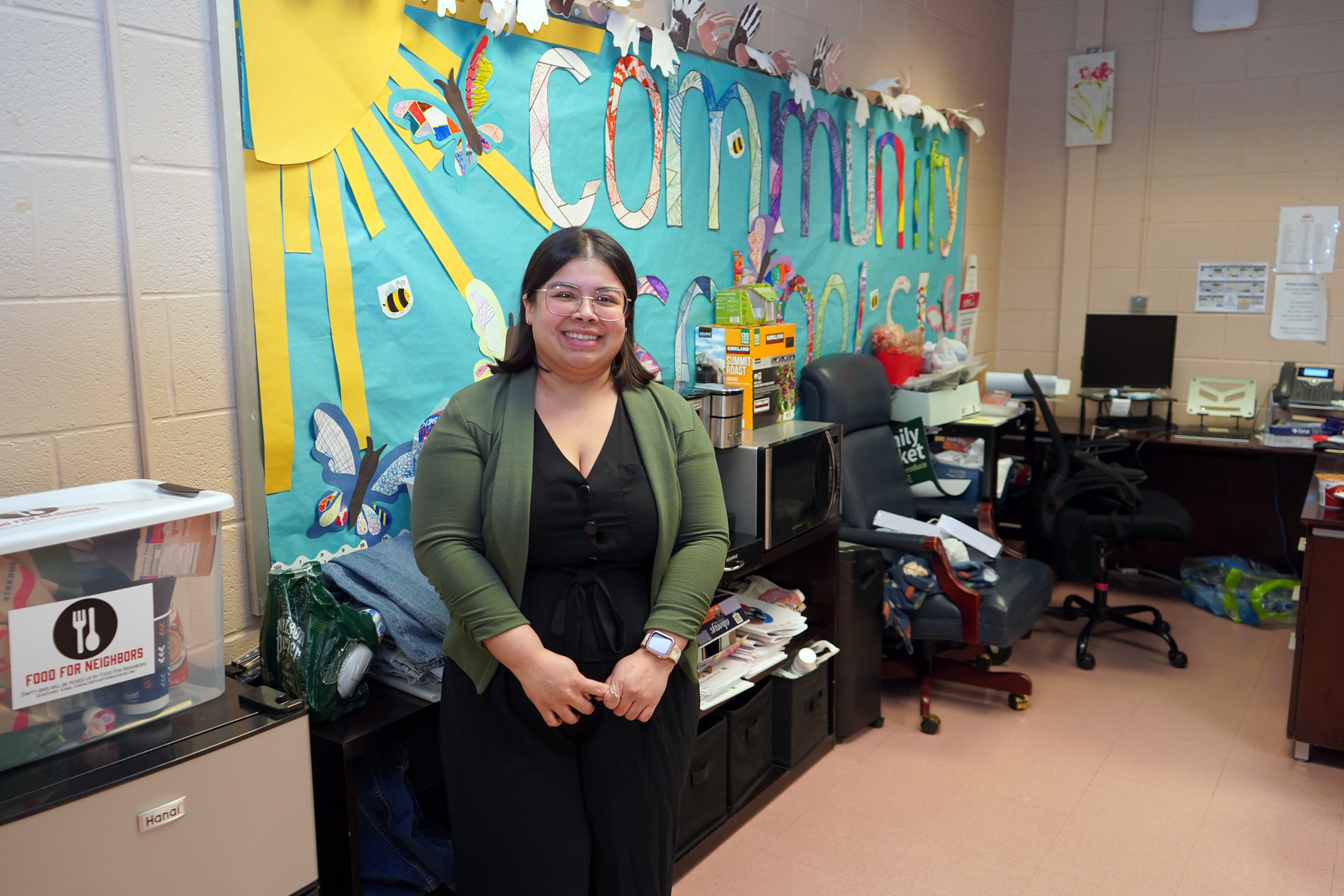
An eighth-grade student calls Walt Whitman’s Community Schools Coordinator Karen Cordova’s office a “safe space.” Here, Cordova serves as both a trusted listener to student problems and the caretaker of a community closet—with basic needs available to students, no questions asked.
“The community room to me is a safe space because I can always come when I’m feeling troubled without feeling rejected. Ms. Cordova provides a gentle and quiet atmosphere for students with her easy-going nature and kind self. I think Walt Whitman Middle School is incredibly fortunate to have a community room that assists students with food, clothing, and other basic needs. It’s even more fortunate to have such a responsible and hard-working person behind it.”
Clothing, shoes, food, weekend bags, and school supplies are among the basic needs provided by United Way NCA and other partners.
“We don’t have to send them to an outside agency like a food pantry. We’ve had families who just ended up on bad luck,” Whitman’s School Services Director Colleen Hooper says of the Community Corner. “It’s safe and it’s available. There are no questions. We just say, ‘Take what you need.’ Have a good day!”
Cordova is the Community Schools Coordinator in the school of more than 800 students. She works directly with about 40 case-managed students, who are identified through early warning systems and data analysis. Coordinators conduct needs assessments, organize family meetings, lead social-emotional wellness groups, and connect families to community resources like housing assistance, healthcare, and food access. This often means sending food home with students whose families face food insecurity.
“It makes a difference and I think Community Schools should be in every school. Families need comfort and access in a trusted environment,” Hooper says. “Karen has developed relationships with these families. That’s what it’s all about. It’s those relationships and security.”
Through the work of Cordova and Whitman’s attendance team, the school’s chronic absenteeism rate dropped by more than half in the 2024-25 school year, from 24.1% the prior year to 12%. Chronic absenteeism is defined as missing 10% or more of school days. Hooper credits a broad approach to tackling student attendance, from incentives like school dances and ice cream parties to providing family services like food markets and healthcare referrals.
“Building those habits now is what’s going to help them when they move on to high school. You’re building that desire to go to school and get those grades. Attendance correlates with those grades,” Cordova says. “If they’re not in the school to get the education and get material, they’re not able to maintain those grades.”
The impact extends through expanded partnerships with feeder high schools. United Way NCA’s Community Schools Coordinators help students navigate the transition to high school and beyond — offering college and career readiness, mentorship, and skill-building opportunities to prepare them for life after graduation. By addressing these transitions, United Way NCA helps ensure every student, regardless of their ZIP code, has a path to a stable and successful life.
Stories like Walt Whitman’s show what’s possible when schools, families, and community partners work together. A safe space, a trusted adult, and a closet stocked with basic needs can be the difference between a student who’s falling behind and one who’s ready to learn.
United Way NCA’s Community Schools model is helping write this story in classrooms across the region—but it takes support to keep coordinators like Karen Cordova in place. Learn how you can bring Community Schools to more students, or make a gift to help fund coordinators in schools that need them most.