
Graduates Share How Brotherhood, Healing, and Financial Support Helped Them Grow as Men and Fathers.
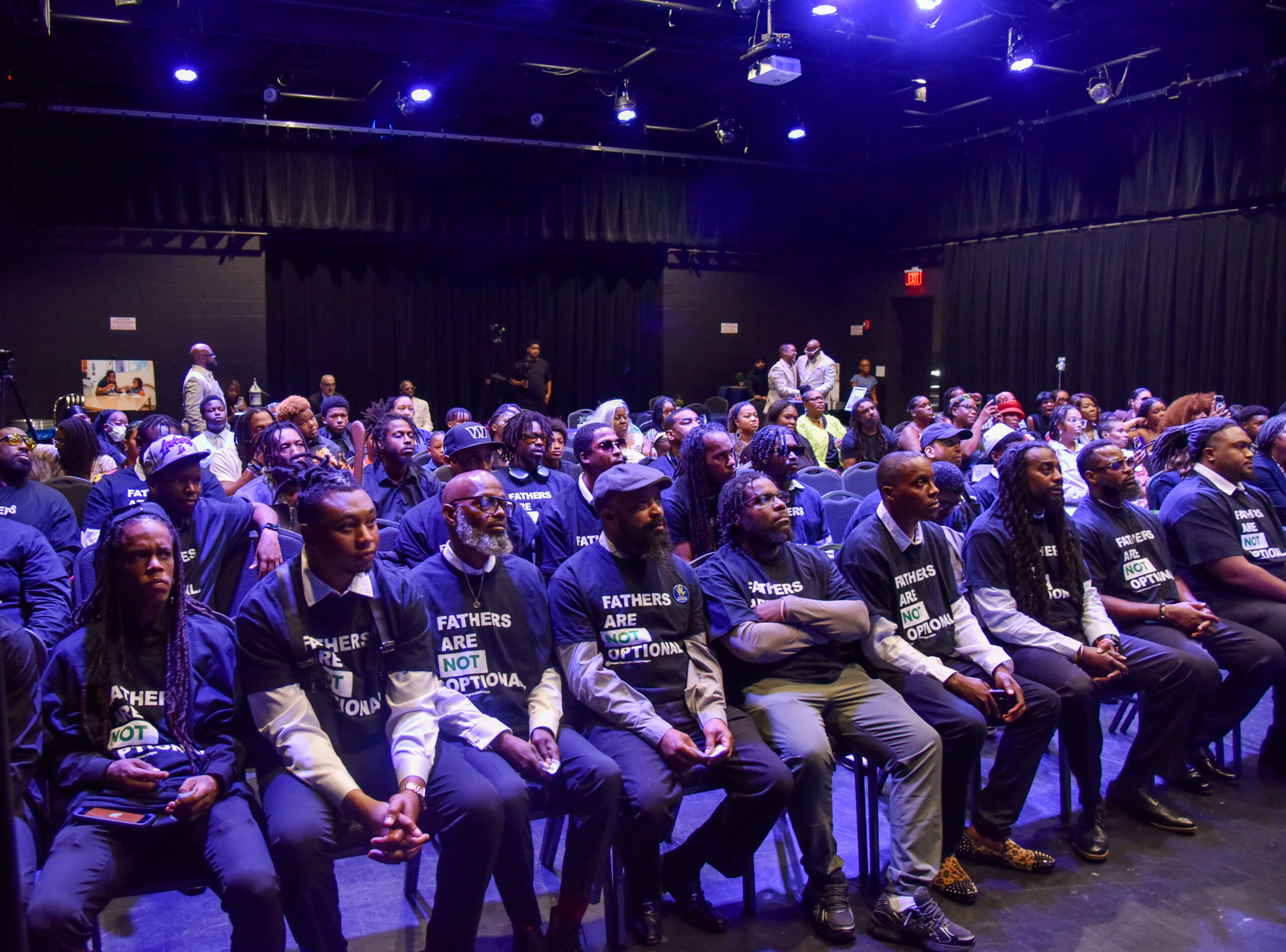
The Greater Washington Urban League (GWUL) and United Way of the National Capital Area (United Way NCA) honored dozens of men and their families during Aug. 29’s Black Fatherhood Blueprint (BFB) Cohort 3 graduation.
The Black Fatherhood Blueprint empowers Black men with the tools, community, and resources they need for lasting change. The evidence-based program features healing circles, peer mentorship, legal and financial assistance, career advancement, and family reconnection.
“It’s a program that helps them become better men, a better father, a better boyfriend, a better husband,” Joshua Beavers, BFB Cohort 3 graduate, said. “It taught me to ask for help and not be scared to ask for help. Not only are they helping, they’re making sure you’re mentally prepared with everything that comes with being a Black father.”
BFB launched in September 2025. United Way NCA partners with GWUL on the program, providing guidance and data management.
“Every graduate out here is walking out knowing their purpose. They are somebody,” BFB Cohort 2 graduate Brian Littles said after addressing graduates.
The 26 fathers in BFB Cohort 3 were honored at THEARC in Southeast Washington D.C.
“It brought me to understand other men from different walks of life, and we actually built a strong bond,” Kevin Saeed, BFB Cohort 3 graduate, said. “I love the love that I get from this program. It’s genuine and it’s turning me into a better person.”
Fathers participated in the Baobab Curriculum to learn about healthy relationships, manhood and father responsibilities, child development, career advancement, and financial empowerment. They also participated in community and personal healing with the Sawubona Healing Circles, led by the Association of Black Psychologists, and Brotherhood of Black Fathers Support Groups, led by Concerned Black Men.
“Black fathers are absolutely not optional. They are essential,” Faith Gibson-Hubbard, Interim President of the Greater Washington Urban League, told the graduates.
Research shows financial strain harms health, while economic stability improves it. For Black fathers, financial stress is one of the strongest predictors of poor mental health.
“When Black men find stable jobs, raise their income, or reduce debt, we see real change. Blood pressure stabilizes. Sleep improves. Fathers are more likely to get preventive care, and family relationships grow stronger,” Dr. Nicole Cooper, Chief External Affairs and Transformation Officer at United Way NCA, said. “United Way NCA came to this partnership because our ALICE households—families who are Asset Limited, Income Constrained, and Employed—are often the same Black and brown communities the Black Fatherhood Blueprint serves. When we strengthen these fathers, we strengthen their children, their families, and their communities.”
The program also leverages existing support provided through United Way NCA’s Washington, D.C., Financial Empowerment Center. The men have eight more months of additional financial coaching and therapy.
“If it wasn’t for my brothers standing beside me, I wouldn’t know where I’d be,” BFB Cohort 3 graduate Andre Route said. “You can never write my story, nor can you paint my picture. I’m my own Picasso. With the tools I have in my toolbelt now, I know I have the resources, the help, and the ability to be a better man and a father in society.”
The program’s fourth cohort will celebrate its induction Sept. 30, 2026. To learn more about the Black Fatherhood Blueprint, visit the Black Fatherhood Blueprint’s webpage. Interested fathers can register for a future cohort.